
Introduction
If you are reading this, chances are you’re running on empty. You’re surviving on lukewarm coffee, sheer willpower, and perhaps a few stolen hours of broken, unsatisfying sleep. You know the feeling all too well: the heavy eyelids, the constant brain fog, the emotional fragility, and the desperate, 3 AM Google searches for “ how to get my baby to sleep through the night” and“ infant sleep regression solutions.”
You are not alone, and you are doing an incredible job. But let’s be brutally honest,chronic sleep deprivation is a form of torture. It impacts your mood, your relationships, your patience, and your ability to simply function in your daily life. When your baby doesn’t sleep, nobody in the house sleeps. The stress of anticipating another wakeful night can be just as exhausting as the wake-ups themselves.
The good news? You don’t have to just “power through” this difficult phase. Technology and baby sleep science have advanced significantly by 2026, offering innovative solutions that actually work. While there is no magic wand to instantly create a perfect sleeper, the right tools can drastically reduce nighttime wake-ups, soothe your little one faster, and finally give you the rest you so desperately need.
In this comprehensive guide, we’ve rounded up the very best baby sleep products of 2026. These aren’t just trendy gadgets or frivolous expenses; they are sanity-saving investments designed to help your baby and you get some much-needed shut-eye.
1. The Ultimate Sleep Savior: Smart Sleeper Bassinet
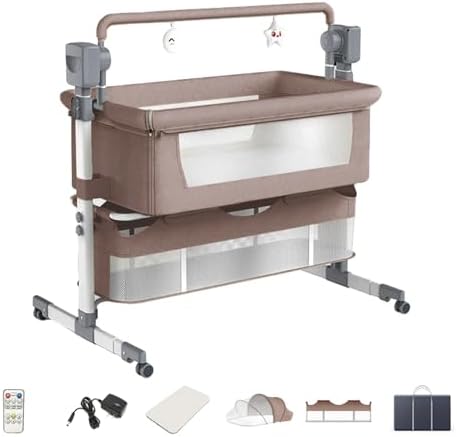
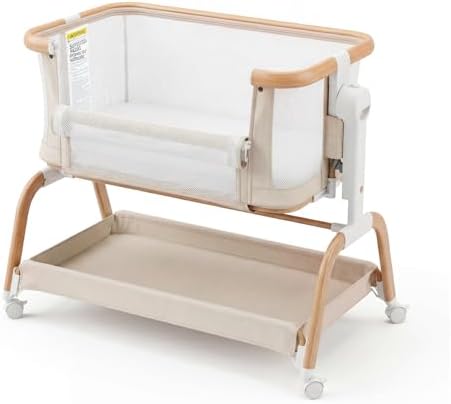
When exhaustion reaches its absolute peak and you feel like you cannot endure one more sleepless night, the SNOO is the intervention many parents swear by. Created by renowned pediatrician Dr. Harvey Karp, this smart bassinet is practically a night nurse in robotic form. It listens to your baby’s cries and automatically responds with gentle rocking and soothing white noise, mimicking the calming environment of the womb.
Why It Works: The magic of the SNOO lies in its responsiveness. It reacts *before* your baby fully wakes up and enters a full meltdown, often soothing them back to sleep within seconds. It also features a secure, built-in swaddle sack that attaches to the bed, ensuring your baby stays safely on their back all night long.
Pros:
- Automatically responds to crying with escalating soothing motions and sounds.
- Keeps baby safely on their back (a major factor in reducing SIDS risk).
- The companion app provides detailed sleep tracking and insights.
- Built-in weaning mode helps smoothly transition your baby to a traditional crib later.
Cons:
- Premium price point makes it a significant investment.
- Can only be used up to 6 months of age (or when baby can get on hands and knees).

2. The Atmosphere Creator: Hatch Rest+ 2nd Gen Baby Sound Machine
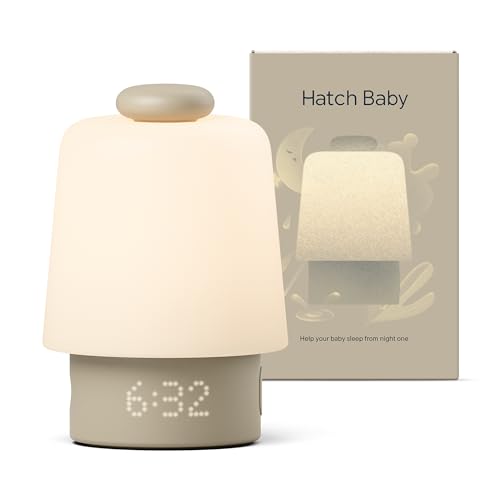
Creating a consistent, calming sleep environment is crucial for infant sleep success, and the Hatch Rest+ is the undisputed master of nursery ambiance. It’s a high-quality sound machine, customizable night light, audio monitor, and time-to-rise clock all rolled into one sleek, modern device.
Why It Works: Continuous white noise masks household sounds (like a barking dog, older siblings, or a creaky floorboard) that might startle a sleeping baby. The Hatch allows you to customize sounds—from ocean waves to heartbeat to simple white noise—and colors directly from your smartphone. As your baby grows into a toddler, the color-changing feature helps them understand when it’s okay to get out of bed.
Pros:
- Fully controllable via a highly intuitive smartphone app.
- Includes a built-in battery for portability (great for power outages or moving between rooms).
- Doubles as an audio monitor over Wi-Fi, saving you from buying a separate device.
- Grows with your child, offering immense long-term value.
Cons:
- Requires a Wi-Fi connection for full functionality and app control.
- Premium sleep content and advanced features require an ongoing subscription.


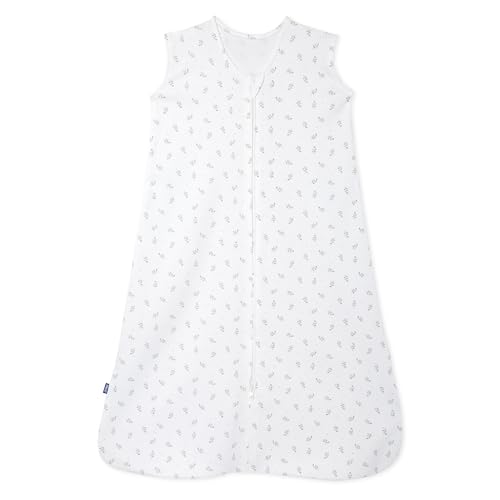
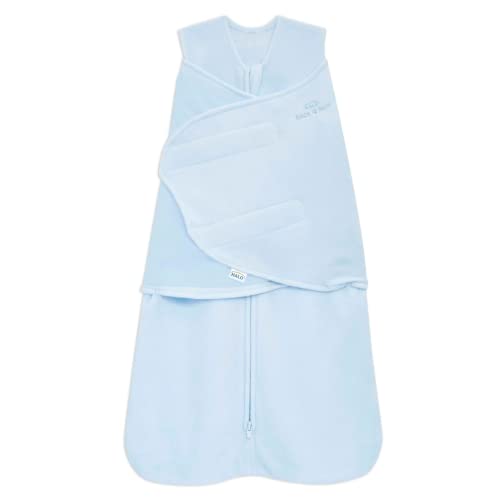
3. The Safer, Foolproof Swaddle: HALO SleepSack Swaddle
In the early months, the Moro (startle) reflex is the ultimate enemy of newborn sleep. Swaddling prevents those jerky arm movements that wake babies up crying, but traditional blanket swaddling can be tricky to master and risky if it comes loose in the crib. The HALO SleepSack takes all the guesswork out of the equation.
Why It Works: This wearable blanket features adjustable fasteners that securely wrap your baby’s arms, either tightly swaddled, hands-to-face, or arms out, accommodating their changing preferences and developmental stages.
Pros:
- Recognized by the International Hip Dysplasia Institute as “hip-healthy.”
- An inverted zipper makes middle-of-the-night diaper changes significantly easier without unswaddling the top half.
- 3-way swaddle adjusts to your baby’s specific sleep style.
- Made of breathable, safe materials to prevent overheating.
Cons:
- The velcro fasteners can be loud during nighttime adjustments.
- Fabric can sometimes pill after multiple washes.

4. The Travel Essential: SlumberPod Portable Privacy Sleep Tent
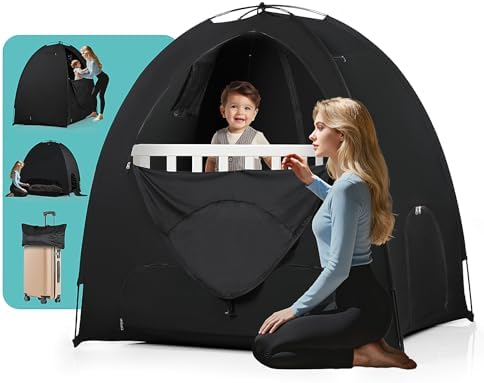
If your baby is finally sleeping well at home, the thought of traveling and ruining that hard-earned progress is terrifying. Sharing a hotel room or staying at the grandparents’ house usually means parents tiptoeing in the dark at 7 PM. The SlumberPod is the ultimate hack for traveling families.
Why It Works: It’s a bottomless, highly breathable privacy tent that perfectly fits over standard travel cribs (like the Pack ‘n Play) and mini cribs. It blocks out nearly all ambient light, creating a familiar, pitch-black sleep environment anywhere in the world.
Pros:
- Creates a completely dark space, crucial for daytime naps and hotel room sharing.
- Made from highly breathable, premium fabric with multiple ventilation panels.
- Fits over most standard playards and mini cribs.
- Includes a designated pouch for a baby monitor and a pocket for a fan.
Cons:
* Can be a bit tricky to assemble the first few times until you get the hang of the poles.
* Requires purchasing their specific fan separately for optimal airflow in warm rooms.


5. Breathing Easy: Frida Baby 3-in-1 Humidifier with Diffuser and Nightlight
A stuffy nose is a guaranteed recipe for a sleepless night. Babies are obligate nasal breathers in the early months, meaning they don’t know how to breathe through their mouths. Any congestion causes instant panic, crying, and waking.
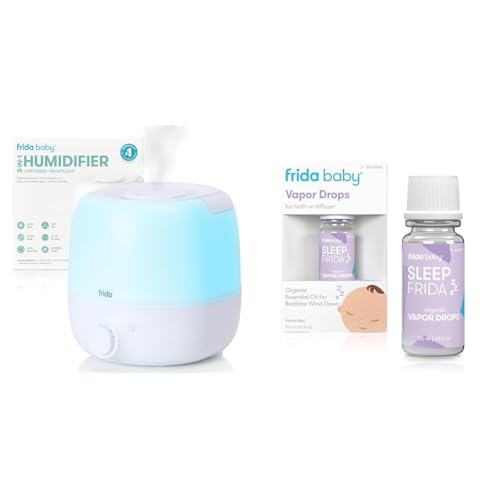
Why It Works: The Frida Baby Humidifier adds essential, cool mist moisture to the dry indoor air, helping to clear tiny nasal passages and soothe dry, scratchy throats. What sets it apart is the ability to add baby-safe essential oils (like eucalyptus or lavender) and its built-in color-changing nightlight, combining three nursery essentials into one device.
Pros:
- Cool mist technology is perfectly safe for nurseries (no burn risk).
- Very quiet operation won’t disturb a light sleeper.
- Surprisingly easy to clean (a huge plus for humidifiers, which can harbor mold).
- Auto shut-off feature kicks in when the water runs out.
Cons:
- * The water tank could be larger for longer, continuous use without refilling.
- * The nightlight might be too bright for some parents’ preferences, even on lower settings.


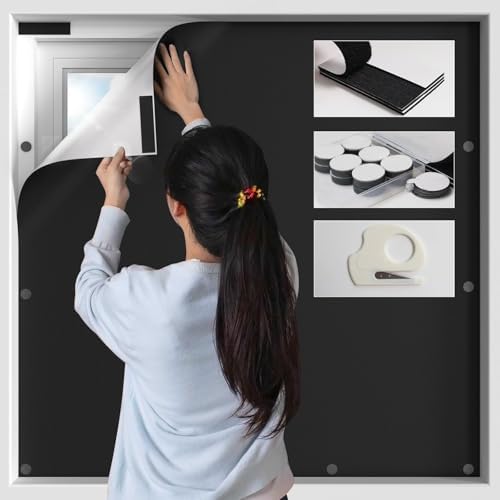
6. Instant Darkness: Sleepout Portable Blackout Curtains
Melatonin, the hormone that regulates sleep, relies heavily on darkness. Standard blinds and thin curtains often leak sunlight, especially during early summer mornings or daytime naps, signaling to your baby’s brain that it’s time to wake up.
Why It Works: These are not your average flimsy travel blinds. Sleepout curtains use industrial-strength suction cups and thermal-insulating, 100% blackout fabric to turn any bright room into a dark cave in seconds.
Pros:
- Truly 100% blackout, significantly extending early morning sleep and improving naps.
- Installs in seconds with heavy-duty, reusable suction cups that actually stay put.
- Thermal fabric helps regulate the room’s temperature.
- Comes with a travel bag, making it perfect for vacations.
Cons:
- Not a permanent aesthetic fixture; they look functional rather than decorative.
- You may need multiple sets for very large windows.


The Exhausted Mom’s Buying Guide: How to Choose What You Actually Need
When you are sleep-deprived, it’s incredibly tempting to buy every single product on the internet at 3 AM. Before you max out your credit card in a desperate bid for rest, consider these crucial factors:
1. Safety First, Always
Always ensure products align with the American Academy of Pediatrics (AAP) safe sleep guidelines. The crib should be completely free of loose blankets, pillows, bumpers, or stuffed animals. If a product seems questionable or makes you nervous, consult your pediatrician before using it.
2. Identify the Core Issue
Is your newborn waking up because their own hands startle them? (Look into the HALO Swaddle or Magic Merlin). Are they waking up because they need constant motion to settle? (Consider the SNOO). Are *you* waking up because of overwhelming anxiety? (The Nanit Pro is your best bet). Pinpointing the exact problem saves you money and frustration.
3. Consider Longevity and Versatility
Products that grow with your child offer the best return on investment. The Hatch Rest+, for example, transforms from a baby sound machine to a toddler time-to-rise clock, making it a fixture in their room for years, not just a few months.
4. Ease of Use at 3 AM
If a product requires complex assembly, has loud, scratchy velcro, or relies on tiny buttons you can’t see in the dark, you will absolutely hate it in the middle of the night. Look for two-way zippers, smartphone app controls, and intuitive, foolproof designs.
Frequently Asked Questions (FAQ)
1.How do I get my baby to sleep through the night?
There is no one-size-fits-all answer, but consistency is key. Establish a calming bedtime routine (bath, book, bed), ensure their room is dark and cool, use white noise, and pay attention to age-appropriate wake windows so they aren’t overtired at bedtime.
When do babies typically start sleeping through the night?
Developmentally, many babies are capable of sleeping a 6-8 hour stretch without feeding between 4 to 6 months of age. However, “sleeping through the night” is subjective, and regressions are completely normal.
Are smart bassinets like the SNOO actually worth the money?
If you are struggling with severe sleep deprivation and can afford the investment (or find one to rent), many parents consider it invaluable. It won’t work for every single baby, but for many, it provides an extra 1-3 hours of sleep per night, which can feel life-changing.
Conclusion: This Too Shall Pass
To the exhausted mom reading this with heavy eyes and an aching back: I see you. The days are long, and the nights can feel endlessly longer. It is perfectly okay to feel overwhelmed, frustrated, and desperate for a full night’s rest. You are human.
Remember that baby sleep is a non-linear journey, not a final destination. There will be frustrating sleep regressions, painful teething disruptions, and rapid growth spurts that throw everything off track. However, equipping yourself with the right tools can make a monumental difference in your family’s overall quality of life.
You don’t have to suffer through the exhaustion unassisted. Whether it’s the peace of mind from a high-tech smart monitor or the simple, soothing ambiance of a sound machine, investing in your baby’s sleep is ultimately an investment in your own mental health, physical health, and well-being.
Take a deep, slow breath. You are doing a wonderful job navigating an incredibly tough season. Now, go grab one of these sanity-saving lifesavers and get ready to finally catch some Z’s. You’ve earned it.